The following Text is from “Leo XIII. God's Prisoner”,published by The Desert Will Flower Press, Papa Stronsay,
unless stated otherwise.
On 1 January 1888, Pope Leo XIII formally and devoutly opened the observance of his Sacerdotal Golden Jubilee Year by a Solemn Mass of Thanksgiving.
A worshipper wrote: “The appearance of Pope Leo was the signal for what I can only describe as a spontaneous outburst, or, rather, an explosion of passionate emotion.
“A wild cheer burst suddenly from all the vast multitude that packed Saint Peter's Basilica from end to end. The crash of silver trumpets in the dome was instantly drowned in a more human music, and the organ was unheard in the hoarse roar of the crowd.
“The scene which followed was simply one of indescribable enthusiasm. The deafening and tremendous shout of 60,000 voices, the vehement and violent clapping of hands, the excited voices, the waving of countless handkerchiefs, the open sobbing of both men and women, altogether made a display of feeling which can seldom have been paralleled, even in the long history of Rome.
“When the people at the other end of Saint Peter's, forgetful
for the moment of the Sacred character of the place, began to hurrah and applaud, at first I imagined the sounds must come from the piazza without, and it was a little shock to me to find that the cheering was actually inside the Basilica.
“Some French Priests, who were not far from me, seemed to have felt this, and, with violent gesticulations, tried to bring the people to a sense of decorum. They might as well have tried to turn back The Tiber with a broom.
The people shouted just because that was their heart's need, and in a moment a great tide of contagious and restless enthusiasm had swept over the Basilica, and all alike, Italians and strangers, cheered as though impelled by one common and masterful impulse.
“Immediately surrounding the Sedia Gestatoria were forty-eight Cardinals, many more Bishops assisting at The Throne, the Colonels of The Noble Guard, The Majordomo and The Master of The Chamber, and the Heads of The Princely Houses of Colonna and Orsini.
“Following The Pope were some 360 Bishops, besides a great number of persons forming The Pontifical Court. His Holiness appeared to be singularly well, and, though very pale and evidently much moved, looking as little as possible like the tired Titan of the spiritual world. His voice, too, though it seemed to falter a little at the beginning of the Mass, was afterwards clear and strong, and, a friend tells me, was heard quite distinctly right at the end of the Transepts as he Blessed the people when leaving Saint Peter's”.
Perhaps the most spiritually illustrious Pilgrim that knelt before Pope Leo XIII, during his Golden Jubilee Year, was a fifteen-year-old girl, the future Saint Thérèse of Lisieux. Her description of the Pilgrimage and Audience, given to her, gives us an intimate glimpse into what such events were like, and into the real sentiments of the most profound love and veneration felt towards the Pope by his children. She writes:
“We spent six days visiting the chief wonders of Rome, and, on the seventh day, we saw the greatest of all - Pope Leo XIII. I longed for, and yet I dreaded, that day, since on it depended my Vocation. No answer had come from the Bishop of Bayeux, and now my one and only hope lay in The Holy Father's permission. But, to obtain that permission, I should have to ask for it, and I trembled at the mere thought of daring to address the Pope in the presence of many Bishops, Archbishops, and Cardinals.
“It was on Sunday morning, 20 November 1888, that we went to The Vatican, and at eight o'clock, we Assisted at the Pope's Mass in his own Private Chapel. His Saintly bearing at the Altar gave abundant evidence that The Vicar of Christ was, in very truth, “The Holy Father”.
“The Holy Father's Mass was followed by a Mass of Thanksgiving, and then the Audience began.
“Pope Leo XIII was seated on a dais, while round him were grouped various dignataries of The Church. According to custom, each visitor, kneeling in turn and kissing, first the foot and then the hand of The Sovereign Pontiff, finally received his Blessing. At this moment, two of The Noble Guards placed their hands on the Pilgrim's shoulders as a sign to rise and leave.
“No-one uttered a word, but I was firmly determined to speak, when, suddenly, The Vicar-General of Bayeux, Fr. Reverony, who was standing next to His Holiness, announced in a loud voice that he forbade anyone to address The Holy Father. On hearing this, my heart beat wildly as if it would break, and I looked for counsel to Céline [Editor: her sister], who whispered: “Speak !”
“The next moment I was on my knees before the Pope. I said imploringly: “Holy Father, I have a great favour to ask of you.” At once, he bent down towards me. “Holy Father,” I repeated, “in honour of your Jubilee Year, allow me to enter Carmel at the age of fifteen.”
“His Holiness said: “Well, child. Well, you will enter if it be God's Will ! ” ”
The Emperor of Germany:Sent a splendid Mitre, worked in Gold and encrusted with Rubies, Emeralds, Sapphires, and Brilliants.
The Empress of Germany:
Sent a set of Mass Vestments.
Queen Victoria of England:
Sent a massive Silver Basin.
The Carmelite Order:
Sent a Silver Pastoral Cross, ornamented with Precious Stones, and with figures of Our Lady of The Rosary, and Saint Peter, and Saint Leo the Great, and Saint Francis, and Saint Teresa of Ávila.
The Pontifical Zouaves:
Sent a handsome Yellow and White Papal Standard, in which England is represented by Saint George, and Ireland by Saint Patrick, and Canada by Saint John the Baptist.
Bombay, India:
Sent a beautiful piece of Tanna Silk, manufactured for The Pope's Jubilee Year. And the Pope sent word of his intention of Celebrating his Jubilee Mass in a Soutanne made from the Tanna Silk.
Hungary:
A Jewish citizen of Hungary sent the gift of a Universal Calendar of Chronology; a monument of patience and method, upon which he had worked for twenty years.
Cuba:
The ladies of Havana sent a generous gift of Peter's Pence, collected by them from door to door, while other Cuban citizens sent Refined Sugar, Wax, Tobacco, Objets d'Art, Church Vestments. All addressed to: “The Vicar of Him Who so greatly valued the Widow's mite”.
The Sultan of Turkey:
Sent an antique Pastoral Ring, set with Precious Stones.
The Queen Regent of Spain:
Sent a magnificent antique Ring.
France:
The people of Paris had made for the Pope a Tiara, whose foundation was a Silver Cloth, embroidered with Fine Pearls, whose Triple Crown was of Gold, studded with 600 Diamonds, Rubies, Emeralds, Sapphires, and whose surmounting Cross contained a huge Diamond.
The Empress of Austria:
Sent a Gold Tiara.
The Duke de Nemours, France:
Sent a Pectoral Cross, studded with Diamonds and Emeralds.
Syria:
Syrian Catholics sent a Cross and Chain, containing fifteen pounds of Gold.
Princess Clotilde Bonaparte, Savoy:
Made and sent a magnificent Cope of White Satin, embroidered with flowers.
Spain:
The ladies of Seville sent a Cope and Clasp of Gold, set with 580 Precious Stones.
The Polish Mission in Paris, France:
Sent a splendid Gold Snuff-Box, inscribed in Polish.
Ireland:
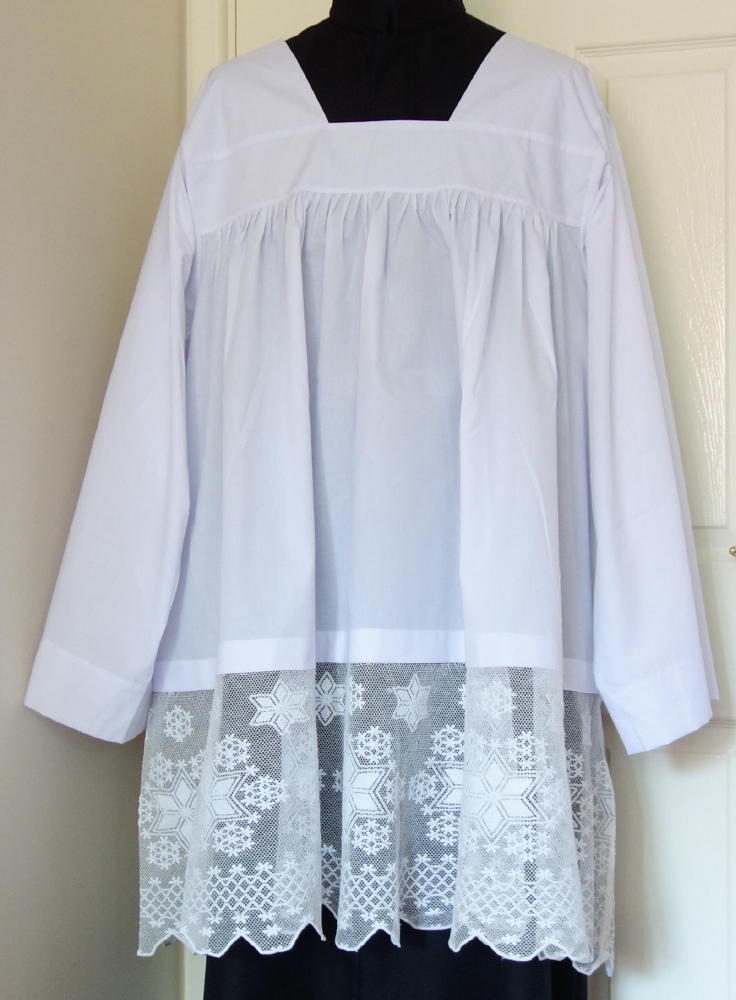
The Dominican Nuns in Cabra, County Dublin, sent an Irish Lace Alb and an Irish Lace Rochet.
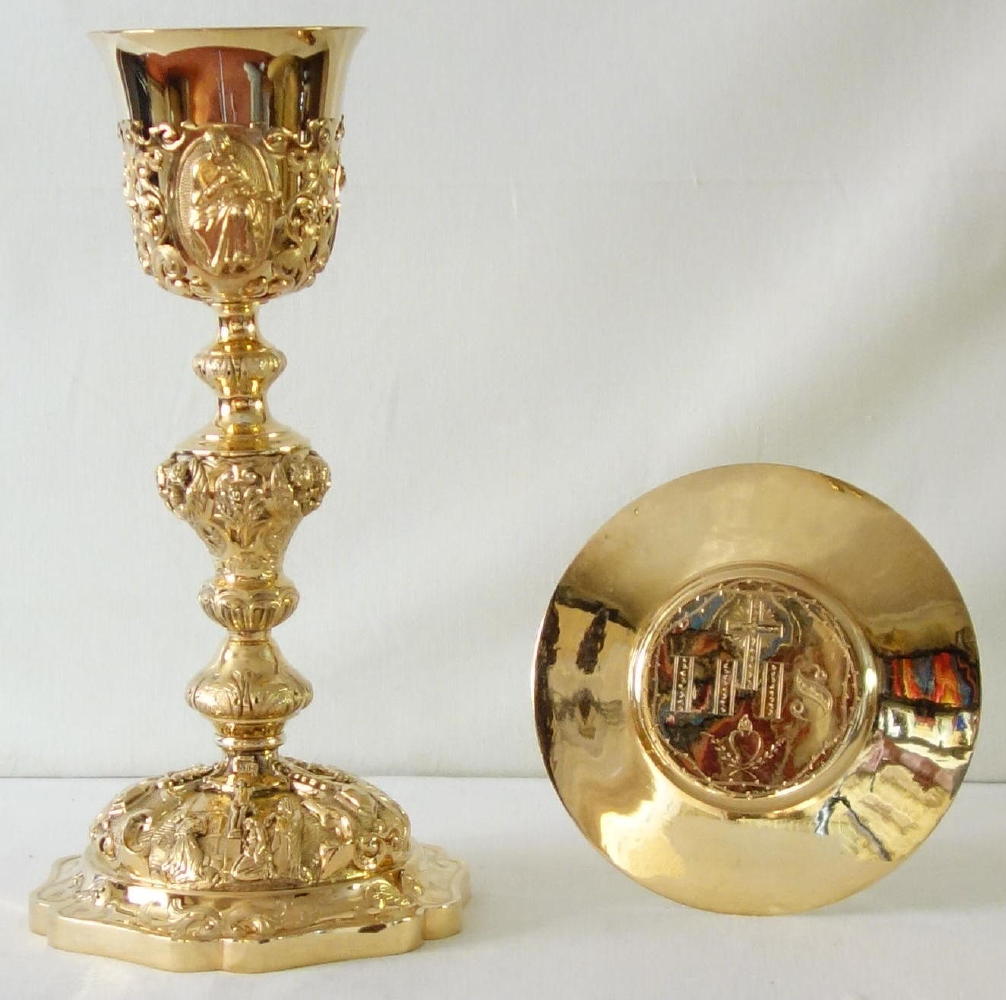
All of these Treasures form part of the Patrimony of The Church, which, in Pope Emeritus Benedict XVI's time as Pope, were put to Public Use, again.
The following Text is from Wikipedia - the free encyclopædia,
unless stated otherwise.
Pope Leo XIII (Italian: Leone XIII; born Vincenzo Gioacchino Raffaele Luigi Pecci;[a] 2 March 1810 – 20 July 1903) was the Head of The Catholic Church from 20 February 1878 to his death in 1903. Living until the age of ninety-three, he was the oldest Pope (with the exception of Pope Benedict XVI as Emeritus Pope), and had the third-longest, confirmed, Pontificate, behind those of Blessed Pope Pius IX (his immediate predecessor) and Pope Saint John Paul II.
He is well known for his intellectualism and his attempts to define the position of the Catholic Church with regard to modern thinking. In his famous 1891 Encyclical, “Rerum novarum”, Pope Leo outlined the rights of workers to a fair wage, safe working conditions, and the formation of trades union, while affirming the rights of property and free enterprise, opposing both socialism and laissez-faire capitalism.
With that Encyclical, he became popularly titled as the “Social Pope” and the “Pope of the Workers”, also having created the foundations for modern thinking in the Church’s social doctrine, influencing the thoughts of his successors. He influenced Mariology of The Catholic Church and promoted both the rosary and the scapular. Upon his election, he immediately sought to revive Thomism, the theology of Saint Thomas Aquinas, desiring to refer to it as the official theological and philosophical foundation for The Catholic Church. As a result, he sponsored the Editio Leonina in 1879.
Leo XIII is particularly remembered for his belief that pastoral activity in the socio-political field was also a vital mission of The Church as a vehicle of social justice and maintaining the rights and dignities of the human person.
Leo XIII issued a record of eleven Papal Encyclicals on The Rosary, earning him the title of the “Rosary Pope”. In addition, he approved two new Marian scapulars and was the first Pope to fully embrace the concept of Mary as Mediatrix. He was the first Pope never to have held any control over The Papal States, which had been dissolved by 1870. Similarly, many of his policies were oriented towards mitigating the loss of The Papal States in an attempt to overcome the loss of temporal power, but nonetheless continuing the Roman Question. He was briefly buried in the grottoes of Saint Peter's Basilica before his remains were later transferred in 1924 to the Basilica of Saint John Lateran.

The following Text is from “Leo XIII. God's Prisoner”,published by The Desert Will Flower Press, Papa Stronsay,
unless stated otherwise.
The following are the Encyclicals of Pope Leo XIII.
Adiutricem: On The Rosary. 1877.
Inscrutabili Dei Consilio: On The Evils Of Society. 1878.
Quod Apostolici Muneris: On Socialism. 1878.
Aeterni Patris: Restoration Of Christian Philosophy. 1879.
Arcanum: On Christian Marriage. 1880.
Grande Munus: On Saints Cyril And Methodius. 1880.
Sancta Dei Civitas: On Mission Societies. 1880.
Diuturnum: On The Origin Of Civil Power. 1881.
Licet Multa: On Catholics In Belgium. 1881.
Etsi Nos: On Conditions In Italy. 1882.
Auspicato Concessum: On Saint Francis Of Assisi. 1882.
Cum Multa: On Conditions In Spain. 1882.
Supremi Apostolatus Officio: The Devotion Of The Rosary. 1883.
Nobilissima Gallorum Gens: On The Religious Question In France. 1884.
Humanum Genus: On Freemasonry. 1884.
Superiore Anno: On The Recitation Of The Rosary. 1884.
Immortale Dei: Christian Constitution Of States. 1885.
Spectata Fides: On Christian Education. 1885.
Quod Auctoritate: Proclaiming A Jubilee. 1885.
Iampridem: On Catholicism In Germany. 1886.
Quod Multum: On The Liberty Of The Church. 1886.
Pergrata: On The Church In Portugal. 1886.
Vi E Ben Noto: On The Rosary And Public Life. 1887.
Officio Sanctissimo: On The Church In Bavaria. 1887.
Quod Anniversarius: On His Sacerdotal Jubilee. 1888.
In Plurimus: On The Abolition Of Slavery. 1888.
Exeunte Iam Anno: Ordering Of Christian Life. 1888.
Libertas: On The Nature Of Human Liberty. 1888.
Saepe Nos: On Boycotting In Ireland. 1888.
Quam Aerumnosa: On Italian Immigrants. 1888.Etsi Cunctas: On The Church In Ireland. 1888.
Magni Nobis: On The Catholic University Of America. 1889.
Quamquam Pluries: On Devotion To Saint Joseph. 1889.
Sapientiae Christianae: On Christians As Citizens. 1890.
Dall'Alto Dell'Apostolico Seggio: On Freemasonry In Italy. 1890.
Catholicae Ecclesiae: On Slavery In The Missions. 1890.
In Ipso: On Episcopal Reunions In Austria. 1891.
Rerum Novarum: On Capital And Labour. 1891.
Pastoralis: On Religious Union. 1891.
Pastoralis Officii: On The Morality Of Duelling. 1891.
Octobri Mense: On The Rosary. 1891.Au Milieu Des Sollicitudes: Church In France. 1892.
Quarto Abeunte Sæculo: Columbus Centennial. 1892.
Magnæ Dei Matris: On The Rosary. 1892.
Custodi Di Quella Fede: On Freemasonry. 1892.
Inimica Vis: On Freemasonry. 1892.
Ad Extremas: On Seminaries For Native Clergy. 1893.
Constanti Hungarorum: Church In Hungary. 1893.
Lætitiæ Sactæ: Devotion To The Rosary. 1893.
Providentissimus Deus: Study Of Holy Scripture. 1893.
Caritatis: Encyclical On The Church In Poland. 1894.
Litteras A Vobis: On The Clergy In Brazil. 1894.
Iucunda Semper Expectatione: On The Rosary. 1894.
Christi Nomen: On Propagation Of The Faith And Eastern Churches. 1894.
Permoti Nos: On Social Conditions In Belgium. 1895.
Adiutricem: On The Rosary. 1895.
Insignes: On The Hungarian Millenium. 1896.
Satis Cognitum: On The Unity Of The Church. 1896.
Fidentem Piumque Animum: On The Rosary. 1896.
Divinum Illud Munus: On The Holy Spirit. 1897.
Militantis Ecclesiæ: On Saint Peter Canisius. 1897.
Augustissimæ Virginis Mariæ: On The Confraternity Of The Holy Rosary. 1897.
Affari Vos: On The Manitoba School Question. 1897.
Caritatis Studium: On The Church In Scotland. 1898.
Spesse Volte: Suppression Of Catholic Institutions. 1898.
Quam Religiosa: On Civil Marriage Law. 1898.
Diuturni Temporis: On The Rosary. 1898.
Quum Diuturnum: On The Latin American Bishops' Plenary Council. 1898.
Testem Benevolentiæ Nostræ: Opinions With Regard To Americanism. 1899.
Annum Sacrum: Consecration To The Sacred Heart. 1899.
Depuis Le Jour: On The Education Of The Clergy. 1899.
Paternæ: On The Education Of The Clergy. 1899.
Omnibus Compertum: On Unity Among The Greek Melchites. 1900.
Tametsi Futura Prospicientibus: On Jesus Christ The Redeemer. 1900.
Graves De Communi Re: Christian Democracy. 1901.
Gravissimas: On Religious Orders In Portugal. 1901.
Reputantiubus: Language Question In Bohemia. 1901.
Urbanitatis Veteris: Foundation Of Athens Seminary. 1901.
In Amplissimo: On The Church In The United States. 1902.
Quod Votis: On The Proposed Catholic University. 1902.
Miræ Caritatis: On The Holy Eucharist. 1902.
Quæ Ad Nos: The Church In Bohemia And Moravia. 1902.
Fin Dal Principio: On The Education Of The Clergy. 1902.
Dum Multa: On Marriage Legislation. 1902.


4.png)